
Amish haircut
In most modern communities, hair is seen as self-expression — cut, colored, styled, shaped, posted, and praised. We trim to match trends, highlight to stand out, curl to impress, and scroll endlessly for inspiration.
But step inside an Amish home on a quiet morning, and you’ll witness something strikingly different.
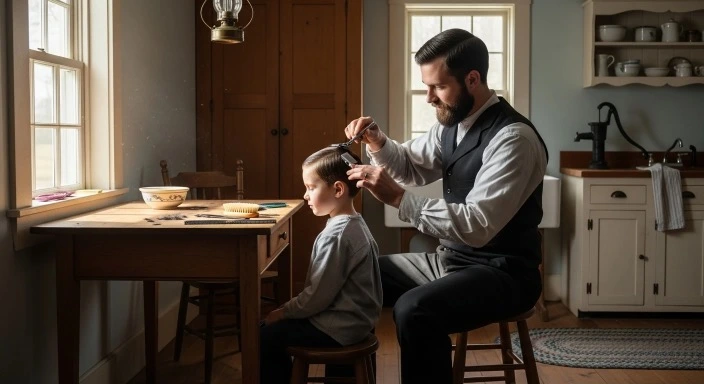
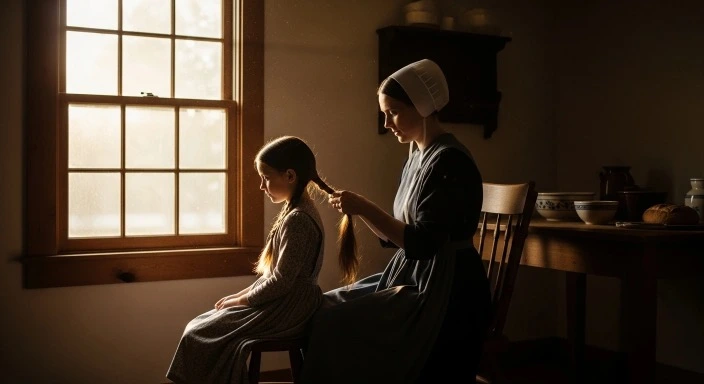
A mother braids her daughter’s long hair neatly, tying it simply before placing a prayer covering over it. A father trims his young son’s hair in the kitchen, using simple tools — no hairstyling gadgets, no fashionable fades, no salon appointment booked months ahead. Only patience, love, and a quiet reminder:
“We live for God, not the world.”
The Amish haircut tradition is not about appearance — it is about obedience, humility, and belonging. Hair becomes a quiet language of faith, showing the heart’s devotion without ever needing a word.
And today, we’re stepping inside that gentle world.
A Faith Rooted Tradition — Where the Hair Rules Come From
The Amish haircut tradition did not come from fashion rules or personal taste; it came from a deeper calling — a desire to remain separate from the world and close to God.
In Amish understanding, Scripture guides daily life. Verses like 1 Corinthians 11 influence how they see hair as:
- A symbol of humility
- A reflection of order
- A sign of obedience
Just as the Amish beard is worn in humility after marriage, the hair of both men and women carries quiet meaning and discipline from childhood on.
The Foundation is Simple:
- God comes first
- Pride fades away
- Humility is beauty
Hair is only hair to many — but to the Amish, it is a spiritual practice.
Boys & Hair — Simplicity From the Start
When an Amish boy begins to grow, his hair is trimmed by family, not by a barber or style expert. His haircut is often:
- Straight and even around the head
- Cut simply above the ears and collar
- Without trendy shaping or fading
The goal is practicality, not personality.
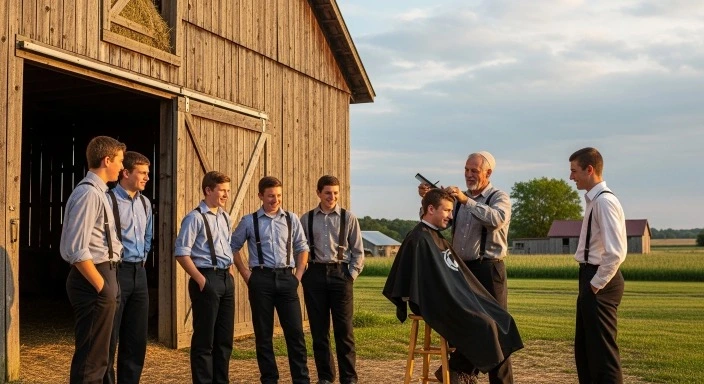
Older boys may help younger siblings learn patience through trimming. And as they grow into teens, the haircut stays humble — reminding them that their worth comes from faith, effort, and character rather than appearance.
You may see slight variations by Amish community, but never vanity. Hair remains simply… hair.
See also: “Amish Beard Explained: The Enduring Meaning of the Amish Look”
Girls & Hair — Tender Hands, Quiet Faith
For Amish girls, hair is seen as a gift, not a feature to reinvent.
It is kept long and never cut, braided gently, and covered modestly. Mothers teach daughters early not only how to care for hair, but why:
“The simplest things, done with love and humility, honor God.”
Each morning, braiding becomes a bonding ritual — the quiet prayers, soft brushing, and slow weaving of strands reflect care, patience, and nurturing love.
Girls learn that beauty is not created by salons — it is formed by character.
Why No Fancy Haircuts? Because Pride Distracts from Faith
The Amish teach that pride is dangerous — not because they fear beauty, but because they value contentment and harmony over attention. Trend-chasing, vanity, and styling draw focus toward the self, and away from God and community.
So Amish hair traditions protect hearts:
- No fashionable haircuts
- No hair dye or gels
- No salon vanity
- No mirror worship
There is profound peace in accepting oneself as God created.
Read also : “Amish Clothing: The Meaning Behind Their Simple Style”
Understanding the Difference — Hair vs. Identity in Amish Life
The world often uses hair to express individuality — but Amish identity rests in faith, family, and humility.
| Modern View of Hair | Amish View of Hair |
| Self-expression | Obedience to God |
| Trend & style | Simplicity |
| Personal image | Community harmony |
| Vanity or confidence | Humility & modesty |
| Frequent styling | Natural, low-maintenance |
Nothing is lost — only noise is removed, so values can speak louder.
Amish haircut
Amish haircut
Spiritual Meaning — A Crown of Humility
Hair is often called a “crown,” but the Amish believe pride should never wear a crown. Their hair traditions reflect:
- Purity
- Obedience
- Inner beauty
- Service over self
A trimmed head, a covered braid, a natural texture — each silently whispers:
“I am enough, as God made me.”
What a powerful message for a world that constantly demands we change to impress others.
Young Adults — Restraint in an Age of Reinvention
Teen years test many families, but in Amish homes, these years are shaped with gentle structure.
While English teens may chase hairstyles for identity…
Amish youth learn identity through:
- Work ethics
- Worship
- Community bonds
- Quiet responsibilities
A boy does not need a bold haircut to feel strong — his strength grows through honesty, labor, and faith.
A girl does not need waves, straighteners, or curls to feel beautiful — her beauty grows through humility, kindness, and purity.
Haircuts Done at Home — Not Salons
If you ever visit Amish country, you won’t find beauty salons buzzing with Amish girls. Instead, you’ll see:
- Mothers trimming boys’ hair
- Sisters braiding sisters
- Family kitchens as barbershops
Haircare is an act of care — not performance.
Amish haircut
Amish haircut
Men, Hair, and the Journey Toward the Beard
For Amish men, the haircut story eventually merges into another symbolic tradition — the beard. Once married, a man keeps his beard but trims his hair short.
Hair expresses discipline before marriage, while the beard expresses devotion after marriage.
The two symbols speak to one faithful journey.
Different Communities, Slight Differences
Not all Amish groups follow hair traditions exactly the same way.
For example:
- Old Order: Strict hair simplicity
- New Order: Slightly more relaxed, but still plain
- Beachy Amish/Mennonite influence: Women may trim ends; still modest
Tradition remains — just softened or strengthened depending on community practice and Scriptural interpretation.
But modest purpose never disappears.
Lessons for the Modern World — The Quiet Inspiration of Amish Hair
What can we learn from the Amish haircut tradition?
Perhaps this:
- We don’t need constant reinvention to feel worthy.
- Beauty can be peaceful, not loud.
- Appearance does not define identity — character does.
- Faith is often seen in the smallest habits, not loud declarations.
In a noisy world, Amish grooming reminds us that sometimes the most powerful expression is simplicity.
Final Thought — Hair, Humility, and the Beauty of Enough
When you see a plain braid beneath a prayer covering, or a young boy with neatly trimmed hair walking to chores at dawn, you’re not looking at a style.
You’re witnessing a philosophy.
A gentle, enduring belief:
“I do not need to stand out — I just need to stand faithful.”
The Amish haircut tradition is more than a look.
It is a daily act of humility, a love letter to simplicity, and a reminder that peace often grows where pride does not.
Quiet hair.
Quiet hearts.
Deep faith.
There is profound beauty in that stillness.