
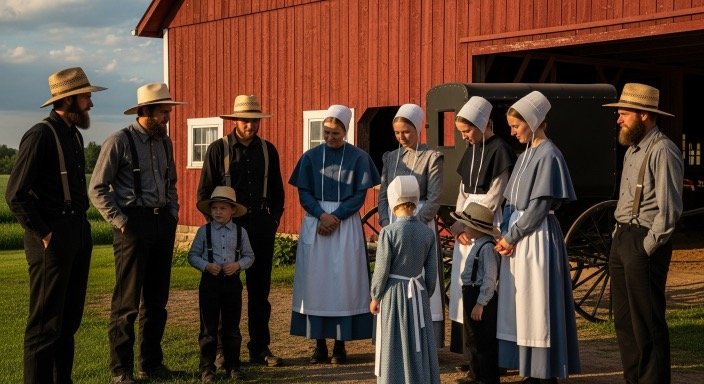
In a world where fashion changes by the season, Amish clothing remains timeless. You’ll never see bright logos, designer labels, or trendy fabrics in an Amish community — not because they reject beauty, but because they define it differently.
For the Amish, clothing is more than fabric. It’s a reflection of faith, humility, and belonging. Every stitch and color tells a quiet story about tradition, identity, and spiritual values that have endured for centuries.
Today, we’ll explore the deeper meaning behind Amish clothing — why it looks the way it does, what each piece represents, and how simplicity became a symbol of strength.
Source: Cindy Woodsmall – Why the Amish Dress the Way They Do
Faith Woven into Fabric
Amish clothing is a daily expression of Gelassenheit — a German term meaning “submission” or “yieldedness to God.” This belief shapes every aspect of Amish life, from how they farm to how they dress.
Amish people believe that modesty, humility, and equality should be visible in how they present themselves. Their clothing is designed not to attract attention, but to reflect an inner calm and devotion to community rather than self.
This is why Amish garments are plain, durable, and handmade — stitched not for display, but for purpose.
Source: Amish View – Amish Beliefs and Modesty
Read next: Amish Women: The Heart of Faith, Family, and Simple Living
The Plain Dress: A Symbol of Equality
Amish Clothing
The hallmark of Amish women’s clothing is the plain dress — long, modest, and often made from solid-colored fabric. It typically includes:
- A full skirt reaching the ankles
- A cape and apron over the bodice
- Long sleeves and high necklines
- A white or black prayer covering (kapp) over neatly pinned hair
Each piece has both spiritual and practical meaning. The cape represents modesty, the apron symbolizes service, and the kapp signifies submission to God’s will.
Even sewing is an act of devotion. Many Amish women sew all their family’s clothes using treadle-powered or hand-cranked machines — a beautiful mix of practicality and faith.
Source: Dutch Crafters – Modesty in Amish Culture
Men’s Clothing: Uniformity with Purpose
Amish men’s clothing is equally simple, emphasizing function over fashion. Common features include:
- Solid-colored shirts (usually blue, gray, or white)
- Dark trousers held up by suspenders (never belts)
- Broad-brimmed hats made of straw or felt
- Black coats without lapels or collars
Buttons are often replaced by hooks and eyes, as buttons historically symbolized military pride — something the Amish avoid.
This consistent style eliminates competition or vanity. By wearing near-identical clothing, Amish men reinforce equality, unity, and humility.
The Colors of Modesty
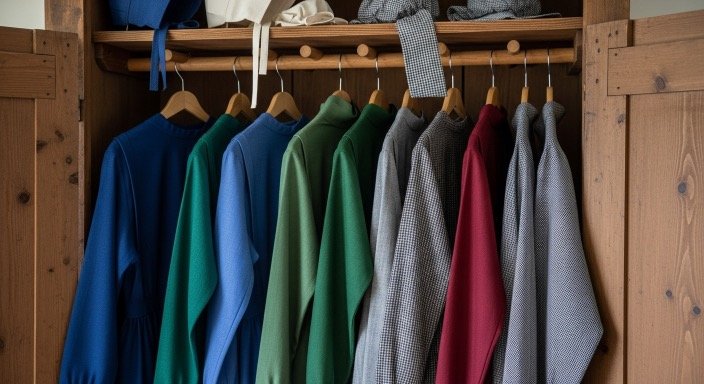
While the Amish are known for plainness, their color choices are far from dull. Different hues carry subtle meanings across communities:
- Black: Symbol of formality, used for Sunday worship and funerals.
- Blue: Represents faith and tranquility — a popular choice for everyday dresses.
- Purple and green: Accepted in some New Order groups as signs of renewal and hope.
- Gray and navy: Common for men’s work clothing.
The colors are intentionally muted, reflecting inner peace over outward display. Every Amish settlement determines acceptable shades, ensuring harmony within that church district.
The Meaning of the Bonnet (Kapp)
Perhaps the most recognizable piece of Amish clothing is the women’s white bonnet — called a prayer covering or kapp.
Amish women wear it based on 1 Corinthians 11:5–6, which teaches that a woman should cover her head as a sign of honor and humility before God.
The kapp is not merely traditional attire; it’s a sacred symbol of faith. Married women usually wear white coverings, while unmarried women wear black ones — a subtle way to reflect marital status without vanity or jewelry.
Source: Amish Heritage– The Significance of the Prayer Covering
Simplicity for Both Work and Worship
Amish clothing has a remarkable practicality. Every outfit serves both daily labor and Sunday worship, differing only by cleanliness and color.
Sunday clothing is typically darker and freshly pressed, reserved for church services. Everyday attire, though simpler, must still remain neat — because maintaining order is a form of spiritual discipline.
This approach eliminates the need for constant wardrobe changes or excess possessions — a quiet rejection of consumer culture.
Also read: Why Amish Don’t Use Cars — Faith Over Convenience)
Homemade and Handmade
Amish Clothing
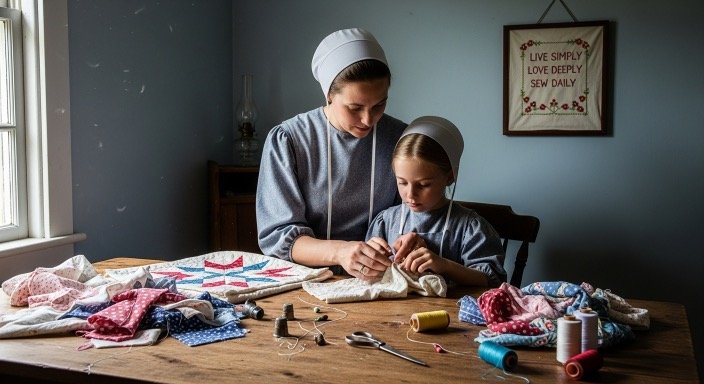
One of the most beautiful aspects of Amish life is their self-sufficiency. Most Amish clothing is homemade—cut, stitched, and mended within the family.
Girls learn to sew at a young age, guided by mothers or older sisters. Fabric is purchased in bulk from plain-clothing suppliers, and every dress or pair of pants is custom-made to fit modestly.
This process reinforces family bonds and preserves skills passed down for generations.
Source: American Art– The Amish Handcraft Tradition
What Amish Clothing Avoids — and Why
Amish communities avoid any adornment that could foster pride or vanity, including:
- Jewelry (wedding rings, watches, or necklaces)
- Zippers or decorative buttons
- Bright patterns or printed fabrics
- Makeup, nail polish, or perfume
This simplicity ensures that spiritual identity outweighs physical appearance. It also aligns with their broader separation from worldly influences.
Even shoes are practical — plain black work boots or sturdy dress shoes that last for years.
Source: The Conversation – Modesty and Religious Expression
Gender, Roles, and Respect
While Amish men and women have distinct roles, their clothing emphasizes balance, not hierarchy.
A man’s black hat and a woman’s white bonnet represent different responsibilities but equal worth. Both symbolize discipline, devotion, and respect toward God’s order.
This equality is reinforced in their communities — where cooperation, not competition, defines relationships.
Source: The Guardian – What We Can Learn from the Amish
Seasonal and Practical Adaptations
Amish clothing adapts slightly to the seasons but never loses its modest essence.
- Winter: Heavy wool coats, black shawls, and gloves (often handmade).
- Summer: Lightweight cotton fabrics, breathable straw hats, and rolled sleeves.
- Rainy days: Long dark coats and protective coverings for buggies and boots.
Even in adaptation, the focus remains on simplicity and endurance, not fashion or flair.
Source: Menno Media– Amish Life in All Seasons
A Statement Against Consumerism
In a culture obsessed with trends, Amish clothing quietly protests consumerism.
They own fewer clothes, repair instead of replacing, and value durability over design. Clothing lasts years, sometimes decades — passed down or repurposed within families.
This mindset isn’t just about frugality; it’s a spiritual practice of contentment and gratitude.
Modern Influence and Subtle Shifts
While the Amish remain steadfast, not all communities dress identically. New Order and Mennonite groups may allow lighter colors, small patterns, or more modern footwear.
However, every decision about clothing is made collectively by the church district — never individually.
This ensures that modesty evolves slowly, without losing its meaning. Even in small changes, the guiding question remains: Does this honor God and the community?
Lessons in Simplicity
Amish clothing teaches us profound lessons about life:
- Less can mean more. Owning fewer things can bring more peace.
- Unity matters. Shared values foster belonging.
- Faith is visible. Every small act — even dressing — can reflect belief.
- Sustainability begins with restraint. True eco-living starts with mindful choices.
Discover: What Keeps Amish Communities Self-Sufficient in a Fast-Changing World
Amish Clothing
Final Thoughts: Faith Sewn Into Every Seam
The Amish don’t wear simple clothing because they’re unaware of fashion — they choose simplicity because it strengthens their souls.
Every plain dress, black hat, and handmade apron tells a story of humility, service, and unity. Amish clothing stands as a living testimony that faith doesn’t need to be loud to be powerful.
In a world defined by excess, their simple style reminds us that peace and purpose are found not in what we wear, but in how we live.
Our Authority Sources
- Cindy Woodsmall– Why the Amish Dress the Way They Do
- Amish View – Amish Beliefs and Modesty
- Dutch Crafters – Modesty in Amish Culture
- Amish Heritage– The Significance of the Prayer Covering
- American Art– The Amish Handcraft Tradition
- The Conversation – Modesty and Religious Expression
- The Guardian – What We Can Learn from the Amish
- Menno Media– Amish Life in All Seasons