
Amish Women
In today’s fast-paced, tech-driven world, simplicity can feel like a luxury. Yet for Amish women, simplicity isn’t just a lifestyle—it’s a calling.
They rise before dawn, bake bread for their families, sew clothing by hand, and manage households that run like well-tuned clocks—all without electricity or digital tools. But beyond the image of bonnets and long dresses lies a story of resilience, love, and purpose.
Amish women are not passive figures of tradition. They are the heartbeat of their communities, carrying faith and family through every change the outside world throws at them.
Faith as the Foundation
Faith defines every aspect of an Amish woman’s life. It shapes her identity, her choices, and her sense of peace.
Amish women believe in Gelassenheit, a German word meaning “submission” or “surrender to God’s will.” This principle guides their humility, patience, and respect for community order.
Their faith isn’t just expressed in church—it’s reflected in every loaf of bread baked, every child cared for, and every prayer whispered before dawn.
Source: Amish America – Amish Beliefs and Practices.
Read next: How Amish Communities Stay Self-Sufficient: Everything You Need to Know.
Daily Life: Where Faith Meets Work
Amish women’s lives revolve around family and home, but that doesn’t mean they lack ambition or skill. Their days are filled with labor, but it’s meaningful work—rooted in cooperation, not competition.
A Typical Day Might Include:
Amish women
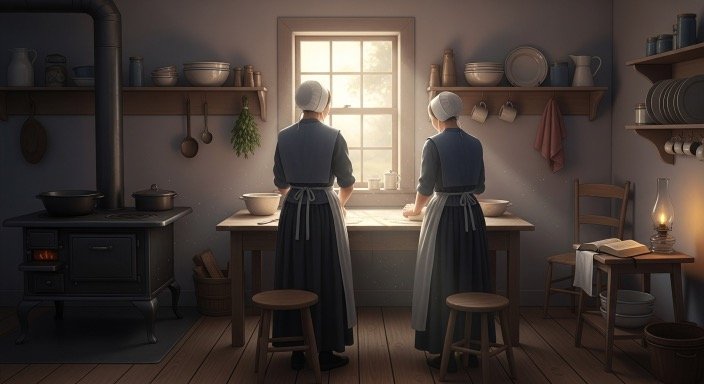
- Waking before sunrise to prepare breakfast and pack lunches.
- Tending to gardens, animals, and children’s chores.
- Sewing clothes or quilts, often by natural light.
- Preserving food for the winter—canning, fermenting, or drying.
- Baking bread, pies, and pastries for family or local sale.
- Teaching and nurturing children in moral and practical lessons.
This rhythm blends devotion, care, and productivity—a pattern that has remained unchanged for generations.
Dress and Modesty: A Reflection of Inner Values
For Amish women, clothing is not fashion—it’s faith made visible.
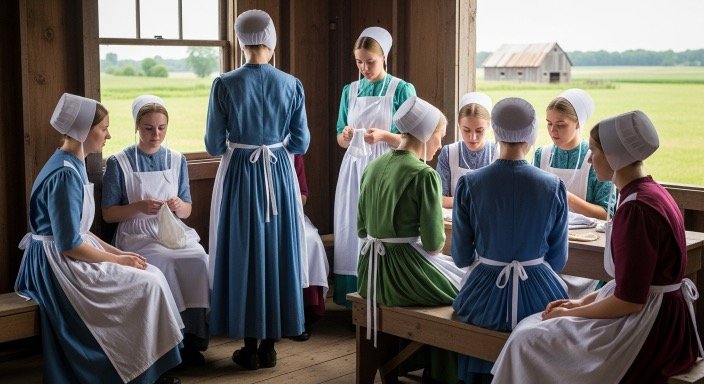
They wear long, plain dresses with capes and aprons, covered by a bonnet (kapp) that symbolizes humility and obedience to God. The style, color, and cut of these garments often indicate the community they belong to.
These clothes are handmade, often without patterns, and sewn with skill and precision. Simplicity isn’t a restriction—it’s a conscious choice that frees them from vanity and consumerism.
Education and Learning by Living
Amish girls attend school until about eighth grade, where they study basic reading, math, writing, and practical subjects. Beyond that, they learn by doing—under the guidance of mothers, aunts, and elders.
This hands-on approach ensures that Amish women grow up prepared for the real world within their community: managing households, teaching children, and contributing to the economy through craftsmanship and trade.
Their education may stop earlier than most, but their knowledge runs deep—especially in homemaking, herbal medicine, and moral leadership.
Source: BBC – Inside Amish Schools
Craftsmanship and Contribution
Many Amish women are talented artisans. Their quilts, furniture accents, and handmade crafts are not only practical—they’re works of art.
Quilting bees, for example, bring women together in fellowship. They chat, pray, and stitch for hours, producing heirlooms that will last generations.
These crafts also serve as income for families, sold at markets or shops. But profit is never the primary motive—it’s community, purpose, and craftsmanship that matter most.
See also: Old Wisdom, New Relevance — Amish Farming Techniques Still Used Today.
Motherhood and Family
Amish Women
Amish Women
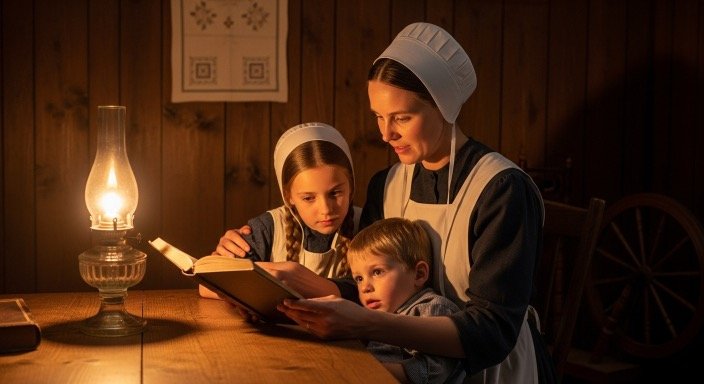
For Amish women, motherhood is a sacred vocation. Families are large—often six to ten children—and the home is the primary classroom.
Mothers teach children to read the Bible, help with farm work, and understand responsibility from an early age. They raise their families in love, faith, and order, ensuring the next generation carries on Amish values.
This hands-on upbringing strengthens both emotional bonds and moral grounding. The result? A society built on trust and stability rather than screens and noise.
Source: National Geographic – The Amish and Family Values
Faith in Action: Women and the Church
While Amish men typically serve as ministers or bishops, women’s influence in the church is equally powerful, though less public.
Amish women lead through example—by living faithfully and teaching humility. They help prepare for church services, cook meals for hundreds, and host worship gatherings in their homes every two weeks.
This quiet spiritual leadership keeps the heart of Amish faith beating strong.
Source: Religion News Service – Women in Amish Faith
Economic Roles: Business, Markets, and Beyond
Many Amish women contribute financially through home-based enterprises. You’ll find them running bakeries, quilt shops, candle-making businesses, or roadside produce stands.
In recent decades, small business growth has given Amish women more economic agency—without undermining their traditional roles. It’s a perfect example of how the Amish adapt when it serves their values, not the other way around.
Their businesses remain family-centered, modest, and community-oriented—never about status, always about service.
Source: Elizabeth College – Amish Enterprises
Community Support and Mutual Aid
When hardship strikes—illness, fire, or crop loss—Amish women are often the first responders. They organize meals, donations, and emotional support.
This spirit of mutual aid keeps the community strong without dependence on government systems or insurance. It’s love in action—a living example of Christian service.
Source: Elizabeth Town College– Amish Mutual Aid Networks
Modern Challenges, Ancient Grace
Although Amish women live apart from modern society, they’re not immune to its influence. Some younger women feel the pull of education, fashion, or technology. Others struggle with balancing obedience and individuality.
Yet, even amid quiet change, their faith endures. Adaptation is approached carefully, through community discussion and prayer.
In the end, what remains constant is grace—the quiet confidence that simplicity, faith, and family never go out of style.
Source: Johns Hopkins University- Changing Roles of Amish Women
Lessons We Can Learn from Amish Women
Amish women remind us that strength doesn’t always shout—it whispers through service and care.
Their way of life teaches us:
- Humility can empower.
- Faith and work can coexist beautifully.
- Simplicity isn’t sacrifice—it’s freedom.
- True strength is quiet, steady, and compassionate.
In a world obsessed with more, Amish women show that less can mean deeper purpose.
Related: What Keeps Amish Communities Self-Sufficient in a Fast-Changing World)
Final Thoughts: The Heartbeat of the Amish Way
To understand the Amish, you must understand their women. They are the keepers of faith, the nurturers of families, and the quiet builders of entire communities.
Their work may be unseen by the world, but it holds the world they live in together. Through every loaf of bread, every prayer, and every lesson taught at home, Amish women embody the beauty of a life well-lived in service and faith.