
Amish Communities Self-Sufficient
In a time when technology changes faster than the seasons, Amish communities remain remarkably self-sufficient. While most of the modern world depends on digital tools, supermarkets, and global supply chains, the Amish rely on time-tested traditions that have guided them for centuries. Their way of life is more than simplicity—it’s a living example of resilience in a fast-changing world.
What keeps Amish communities self-sufficient is not stubborn resistance to progress, but a deliberate choice rooted in faith, cooperation, and practical wisdom.
Faith as the Foundation of Self-Sufficiency
Every aspect of Amish life begins with faith. The Amish believe that work, humility, and separation from the outside world bring them closer to God. This belief translates directly into their daily routines—farming, carpentry, homemaking, and craftsmanship all become acts of devotion.
Self-sufficiency, therefore, is a spiritual duty. By avoiding reliance on outside systems, the Amish maintain both physical independence and spiritual integrity. Their lifestyle reinforces the idea that faith and labor are inseparable.
Reference: Amish Amish – Religious Beliefs
Amish Communities Self-Sufficient
The Power of Community: Many Hands, Shared Goals
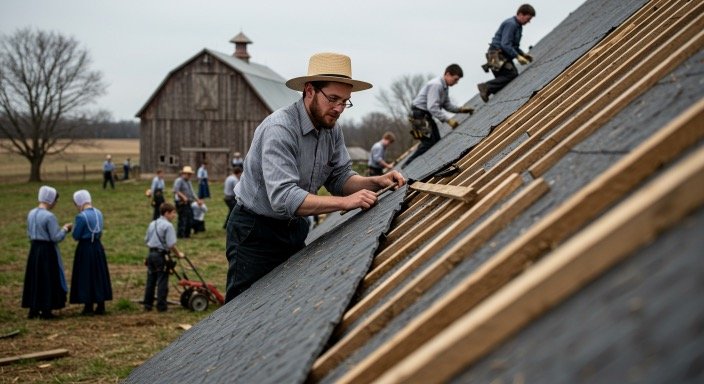
One of the main reasons Amish communities remain self-sufficient is their unparalleled sense of unity. In a culture that celebrates individual success, the Amish emphasize community success. When a barn burns down, neighbors rebuild it within days. When a family faces illness, others harvest their crops.
This interdependence replaces the need for insurance, social welfare, or corporate systems. Their self-sufficiency doesn’t come from isolation—it comes from cooperation.
Reference: BBC – The Amish
We suggest to read our article: How Amish Build Houses Without Power Tools
Farming: The Heartbeat of Amish Independence

Amish Communities Self-Sufficient
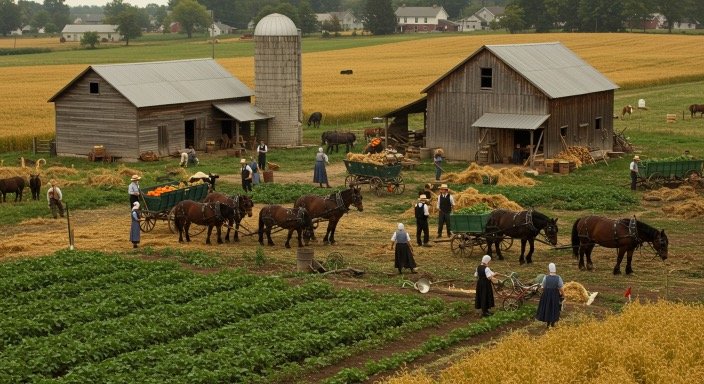
Agriculture is more than a livelihood—it’s the backbone of Amish survival. While many modern farms rely on machinery, chemicals, and high-tech irrigation, Amish farming remains low-impact and hands-on.
Using horse-drawn plows and crop rotation, they cultivate fertile soil without depleting it. Manure and compost replace synthetic fertilizers, ensuring natural balance. The slow rhythm of farming keeps them grounded, self-sustained, and connected to the land.
Reference: Kenyon – Amish Farming
Read our article: Old Wisdom, New Relevance: Amish Farming Techniques Still Used Today
The Role of Simple Technology
Contrary to popular belief, the Amish don’t reject all technology—they selectively adopt what aligns with their values. For example, compressed-air tools, hand pumps, and non-electric lighting are common on Amish farms.
The guiding principle is control: technology must serve the community, not dominate it. By limiting their dependence on electricity and machines, they ensure that human labor and relationships remain central to daily life.
Reference: Groops ETown – The Amish Technology
Amish Communities Self-Sufficient
Skills That Sustain Generations
Amish Communities Self-Sufficient
While automation has replaced many manual trades elsewhere, the Amish continue to pass down practical skills—carpentry, quilting, metalwork, and canning. These abilities ensure that nearly everything they need can be made at home or within the community.
For instance, furniture built by Amish craftsmen is famous for its quality and durability. Food preservation skills, like pickling and drying, keep families nourished year-round. This tradition of craftsmanship transforms necessity into artistry.
Reference: University of Cambridge – Keeping the World at Arms Length
Education for Real-World Self-Reliance
Amish education stops at eighth grade, but it prepares children for life far better than many advanced degrees. Lessons focus on reading, math, penmanship, and practical trades. Students learn how to grow food, build structures, sew, and manage finances—all with moral grounding.
This early hands-on training creates adults capable of surviving without external dependence. Their education isn’t about competition—it’s about contribution.
Family Labor: A Shared Enterprise
Unlike modern economies where work and family are often separate, Amish households blend them seamlessly. Each member contributes—fathers lead farms or workshops, mothers manage home production and teaching, and children help with daily chores.
This structure instills responsibility from an early age. Family businesses, such as bakeries or woodworking shops, thrive because everyone’s efforts count. The result is both emotional and economic independence.
Reference: Amish Heritage – Family and Work Values
Self-Sufficient Food Systems

Amish Communities Self-Sufficient
Amish homes are miniature ecosystems. Gardens provide vegetables, orchards yield fruits, and livestock supply dairy, eggs, and meat. Many families produce nearly everything they consume, reducing reliance on grocery stores.
Food preservation methods—smoking, canning, drying, and fermenting—ensure food security through winter. Even in times of global shortages, Amish communities rarely face hunger, thanks to centuries-old self-sustaining habits.
Reference: Science Direct – Traditional Farming Practices
Economic Independence Through Local Markets
Many Amish communities supplement their income through small businesses. They sell baked goods, quilts, furniture, and produce at local markets or roadside stands. Because they rely on craftsmanship rather than mass production, customers value their products for authenticity.
This local-first economy keeps money circulating within the community and minimizes exposure to unstable global markets—a cornerstone of true self-sufficiency.
Reference: Cornell Small Farms Program – Amish Enterprises
Off-Grid Living and Resource Management
Amish households are designed for independent living. Without reliance on electricity or modern utilities, they use kerosene lamps, wood-burning stoves, and gravity-fed water systems. Rain barrels and wells provide clean water, while natural ventilation cools their homes in summer.
This lifestyle drastically reduces waste and carbon emissions, proving that sustainable living doesn’t require modern innovation—it requires discipline and mindfulness.
Reference: Off The Grid News – Amish Off Grid Sustainability Lessons
Conflict Avoidance and Community Harmony
Self-sufficiency isn’t only economic—it’s social. Amish communities maintain peace and stability by resolving conflicts internally through forgiveness and church discipline. They avoid lawsuits and political involvement, believing that humility and reconciliation preserve unity.
This emphasis on harmony strengthens trust within the community, ensuring that cooperation remains the foundation of survival.
Reference: The Ohio State University – Amish Conflict Resolution
Adaptation Without Compromise
Even though they live simply, the Amish quietly adapt to modern realities. Some have opened small solar shops or produce stands using limited technology. Others manage businesses that ship goods nationally—without owning computers or smartphones.
The secret is balance: adopting innovation only when it doesn’t compromise their values. This measured adaptability keeps them relevant while preserving identity.
Reference: Groups ETown– Modern Amish Adaptations
The Role of Faith in Facing Change
As the outside world grows more digital and disconnected, the Amish draw strength from faith. Their belief system emphasizes humility, community, and simplicity—all antidotes to modern stress and overconsumption.
By trusting in divine providence and each other, they navigate change without fear. Their self-sufficiency is not about rejecting the world—it’s about thriving on their own terms within it.
Reference: Discover Lancaster – Amish Faith Practices
Lessons the Modern World Can Learn
The Amish model challenges modern assumptions about progress. They prove that independence isn’t achieved through more technology—it’s built through values, cooperation, and skill.
From them, we learn that:
- Simplicity is strength. A slower life can be more sustainable.
- Community creates security. Support replaces dependence.
- Faith brings clarity. Purpose guides resilience.
In many ways, what keeps Amish communities self-sufficient is exactly what the modern world is rediscovering: balance, purpose, and belonging.
Final Thought: Enduring Through Connection
In a fast-changing world, the Amish remain anchored by principles that never fade. Their farms, families, and faith remind us that progress without roots leads to fragility. True resilience comes not from innovation alone, but from knowing who you are and what you stand for.
By living simply and relying on one another, Amish communities show that the oldest ways of life may still be the most enduring.
Reference: Amish America – The Strength of Tradition
Amish lifestyle, Amish sustainability, Amish traditions, Amish community, Amish farming, simple living, off-grid living, self-reliance, traditional skills