
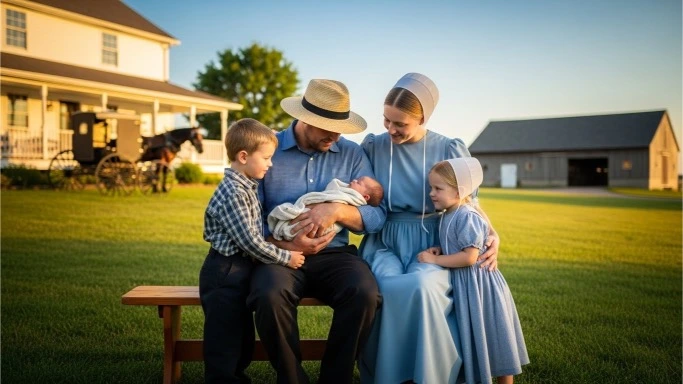
If you’ve ever spent time around Amish families—or even just read about them—you may have noticed something quietly striking: the names.
They feel familiar. Gentle. Almost timeless.
Names like Sarah, Anna, John, Samuel, Mary, and Jacob appear again and again across Amish communities. At first glance, it may seem repetitive. But beneath that simplicity lies a deeply intentional tradition shaped by faith, humility, and a strong sense of belonging.
Amish names are not chosen to stand out. They are chosen to anchor a child in community, connect generations, and reflect values that matter more than uniqueness. In a world where baby names chase trends and individuality, Amish naming traditions offer a refreshing reminder: sometimes meaning matters more than originality.
This article explores the heart behind traditional Amish names—why they stay the same, how they are chosen, and what they reveal about Amish faith, culture, and family life.
Why Amish Names Are So Simple
Traditional Amish names follow one guiding principle: humility before individuality.
The Amish believe names should not draw attention or elevate one person above another. A name is not meant to impress. It is meant to fit quietly into the life of the community.
This belief comes directly from Amish faith. Humility, modesty, and equality are core values. Choosing a simple, familiar name reflects those values from the very beginning of a child’s life.
Instead of asking, “How unique is this name?” Amish parents often ask,
“Does this name honor our faith, our family, and our community?”
The Role of Faith in Amish Naming Traditions

Religion plays a central role in Amish life, and naming a child is no exception. Most traditional Amish names come from the Bible or from early Christian history.
Common examples include:
- Boys: John, Samuel, David, Daniel, Joseph, Jacob
- Girls: Mary, Sarah, Anna, Elizabeth, Lydia, Ruth
These names are chosen not just for familiarity, but for spiritual meaning. Many Amish parents name children after biblical figures known for obedience, patience, service, and faithfulness.
Rather than celebrating individuality through names, Amish culture celebrates character. A name becomes a reminder of the kind of life a child is encouraged to live.
Amish Names often reflect the same humility seen in dress and daily life — explored further in Plain Dress, Big Meaning: How Amish Clothing Reflects Faith
Why Amish Families Reuse the Same Names
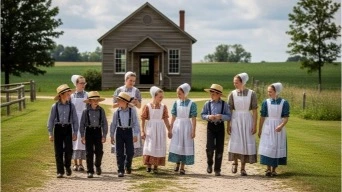
One of the most common questions people ask is:
“Why do so many Amish people share the same names?”
The answer is both practical and spiritual.
1. Honoring Family Lines
Many Amish children are named after grandparents, parents, or respected elders. This strengthens generational bonds and keeps family history alive.
2. Emphasizing Community Over Self
When many people share the same name, no one stands out because of it. The Amish believe this reinforces equality and unity.
3. Avoiding Pride
Choosing a rare or flashy name can invite attention. Amish families intentionally avoid anything that could encourage pride.
This tradition also explains why middle names are rare and nicknames are often practical rather than playful.
An in-depth explanation of Amish naming customs appears in this cultural overview by Amish America.
How Amish Communities Handle Duplicate Names
With so many shared names, you might wonder how Amish communities tell people apart.
They rely on:
- Family associations (John Miller vs. John Yoder)
- Occupations (John the carpenter, John the farmer)
- Location (John from the north farm)
- Age or birth order
This system reinforces identity through relationships, not labels. A person is known by their role in the community rather than by a unique name.
This same community-first mindset shapes Amish parenting, discussed in Raising Children the Amish Way: Faith, Work, and Togetherness
Amish Naming Rules and Church Ordnung
Every Amish community follows an Ordnung, an unwritten set of rules that guides daily life. Naming practices often fall under these guidelines.
While rules vary slightly by district, most Amish communities:
- Discourage modern or trendy names
- Prefer biblical or historically accepted names
- Avoid names tied to pop culture or celebrities
Parents usually consult elders or follow long-standing family patterns. This ensures continuity and prevents sudden shifts that might disrupt community harmony.
Differences Between Amish, Mennonite, and Modern Naming
While Amish naming traditions are strict, Mennonite naming practices tend to be more flexible.
- Amish: Traditional, biblical, repetitive
- Mennonites: Biblical plus some modern influence
- Modern society: Trend-driven, expressive, individualistic
This contrast highlights how Amish names serve a purpose beyond identity—they protect cultural continuity.
For a broader comparison, see Mennonites vs Amish
Common Questions About Amish Names
Q1: Do Amish Ever Use Modern Names?
Rarely. Some New Order Amish communities allow slightly broader choices, but most still favor traditional names.
Q2: Do Amish Children Have Middle Names?
Most do not. Middle names are often seen as unnecessary or individualistic.
Q3: Are Amish Names the Same Across All Communities?
Many overlap, but spelling variations and pronunciation differences exist depending on region.
Q4: Do Amish Change Names After Baptism?
No. Names remain the same throughout life.
Q5: Why do Amish names repeat so often?
To honor family, avoid pride, and reinforce equality.
Q6: Are Amish names always biblical?
Most are, though some come from early Christian tradition.
Q7: Can Amish parents choose any name they want?
Choices are guided by community expectations and faith values.
Q8: Do Amish people use nicknames?
Yes, but usually practical ones within the community.
Amish Names Rarely Go Out of Style
Trends come and go, but Amish names endure because they are rooted in:
- Scripture
- Family legacy
- Community stability
- Faith-based values
These names are not chosen to feel modern. They are chosen to feel faithful.
A historical look at Amish naming continuity appears in the Global Anabaptist Mennonite Encyclopedia.
What Modern Families Can Learn From Amish Naming
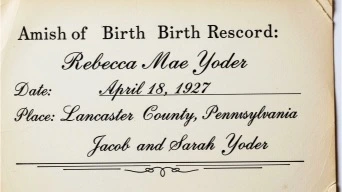
Even for non-Amish families, there’s something deeply grounding about this approach.
It reminds us that:
- A name doesn’t have to be unique to be meaningful
- Simplicity can carry depth
- Tradition can coexist with love and intention
Choosing a name can be an act of reflection rather than expression.
The Takeaway
Traditional Amish names carry a quiet beauty. They don’t chase attention or novelty. Instead, they ground a person in faith, family, and community from the moment they are spoken aloud.
In a fast-moving world, Amish naming traditions remind us that identity doesn’t need to be loud to be meaningful. Sometimes, the simplest names carry the deepest roots.
And perhaps that is the true secret behind Amish names—not how old they are, but how faithfully they continue to serve what matters most.