
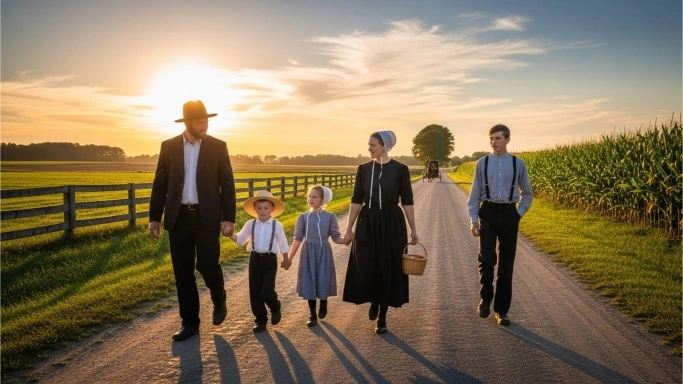
Raising Children the Amish Way
If you’ve ever watched Amish children play in a grassy field, help with chores before sunrise, or walk hand-in-hand to a small schoolhouse, you’ve probably wondered: How do the Amish raise children who seem so grounded, respectful, and connected to their families?
The answer isn’t complicated, yet it runs deep. Amish childhood is built on faith, work, and togetherness—three pillars that shape how children learn, grow, and understand their place in the world. There’s no rush, no screen glow, and no pressure to chase the newest trend. Instead, Amish families nurture virtues that modern life often pushes aside: patience, gratitude, humility, and community.
As you explore this beautiful approach to parenting, you may notice echoes of it in your own heart—a longing for a slower, more meaningful rhythm. And while the Amish lifestyle doesn’t fit everyone, the wisdom behind it reminds us of something timeless: raising children is less about perfection and more about presence.
For a deeper look at how Amish schooling reflects this calm, grounded approach, you may enjoy our warm and reflective article: Inside Amish Schools: You Will Love How Simplicity Shapes Education.
Family at the Center — Where Everything Begins
For the Amish, family is the foundation of a child’s life. Parents, siblings, grandparents, and extended kin create a close-knit community that supports every stage of childhood. Babies spend their early years surrounded by gentle voices, hymns, and hands willing to hold them. As they grow, they learn that family isn’t only a group of people—it’s a promise to care for one another.
In many Amish homes, evenings are spent together around the table. Phones don’t interrupt. Screens don’t distract. And instead of drifting into separate rooms, families linger, talk, laugh, and sometimes share stories from the Martyrs Mirror, a book filled with accounts of enduring faith. This rhythm of connection teaches children early that they belong to something bigger than themselves.
Scholars from the Young Center for Anabaptist and Pietist Studies note that Amish parenting emphasizes constant connection and mutual dependence, creating an environment where children feel secure and deeply rooted.
Faith as Everyday Life — Not a Sunday Habit
In Amish households, faith doesn’t appear once a week, it fills every hour. Children listen to Scripture read aloud at the breakfast table. They join their parents in silent prayer before meals. They grow familiar with hymns long before they can read the German songbooks.
But what truly shapes their faith is the way adults live it. The Amish believe that children learn through example, not lectures. So they watch their parents forgive quickly, speak gently, help neighbors without hesitation, and choose peace even when the world around them doesn’t.
This lived faith anchors Amish children, nurturing a quiet confidence and inner steadiness. It teaches them that God walks with them through ordinary days, in small acts of service and moments of gratitude.
If you’d like to explore how the Amish express faith beyond parenting, you might appreciate our article: Spiritual Practices of the Amish People: Prayer, Church, and Silence.
Work as a Blessing — Not a Burden
One of the most distinctive parts of Amish childhood is the role of work. Chores aren’t punishments or duties—they’re an invitation to participate in daily life. By the age of four or five, Amish children already help with simple tasks: sweeping the porch, gathering eggs, feeding the goats, or helping mother roll out dough. By their teenage years, many of them carry responsibilities that modern children rarely experience.
The Amish teach an important lesson: work isn’t something you escape, it’s something you embrace.
Children discover purpose in their contributions. They see how their efforts help the family thrive. And they develop a strong work ethic without resentment because chores feel like a natural extension of togetherness.
This perspective also protects their emotional well-being. Research shows that children who grow up with meaningful household roles often develop stronger confidence, resilience, and empathy. Amish parenting reflects this truth beautifully.
Amish families view labor as both physical and spiritual, creating a sense of unity across generations.
Childhood Without Screens — A Different Kind of Freedom
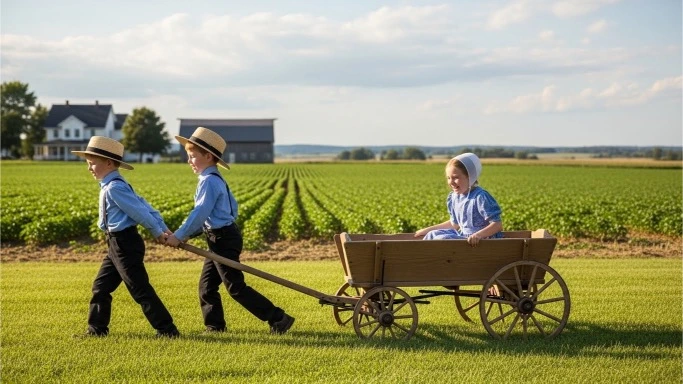
To an outsider, the idea of raising children without television, tablets, video games, or smartphones may seem unimaginable. But for Amish parents, limiting technology isn’t about restriction, it’s about protection. They want their children to spend childhood outdoors, not online.
Instead of glowing screens, Amish children grow up with glowing sunsets. Instead of scrolling, they explore fields, streams, forests, and gardens. Their play is active, imaginative, and deeply connected to nature. They climb hay bales, build forts, chase chickens, and play games that sometimes date back centuries.
This “freedom from distraction” gives Amish children a gift that many modern families long for: a sense of presence.
They learn to be content with simple joys, to appreciate silence, and to find wonder in everyday life.
You may also enjoy reading how Amish women nurture homes full of calm and connection in Amish Women: The Heart of Faith, Family, and Simple Living.
Discipline Through Calm Guidance — Not Harsh Punishment
Amish discipline is rooted in relationships, not fear. Parents rarely shout. They rarely use physical punishment. Instead, they guide their children through calm correction, gentle redirection, and firm consistency. The goal isn’t to demand obedience, it’s to build character.
Children learn early that actions carry consequences, but the correction always comes with warmth and reassurance. The Amish believe that a child’s heart softens through love, not force. This approach teaches children integrity, responsibility, and self-control without creating resentment.
Community Parenting — “Many Hands Make Gentle Children”
In most Amish settlements, raising children isn’t a task parents carry alone. The entire community participates. A child may learn baking from a neighbor, carpentry from an uncle, quilting from a grandmother, and horse care from an older cousin. This shared responsibility creates a safe environment where children feel watched over, encouraged, and supported from every direction.
And because adults work and worship together, Amish children grow up surrounded by consistent examples of kindness, humility, and unity. They learn how to live with others because they see adults doing the same, day after day.
This community-centered approach creates emotional security. Children rarely feel isolated or forgotten. Everyone knows their name. Everyone looks out for them. And in return, children grow naturally into adults who feel responsible for the people around them.
For another example of how community shapes identity, see our reflective piece What Keeps Amish Communities Self-Sufficient in a Fast-Changing World.
Learning by Doing — The Amish Approach to Education
Amish children typically attend one-room schoolhouses until eighth grade. Their education focuses on reading, writing, arithmetic, geography, Scripture, and practical skills. Instead of screen-based learning, they gain knowledge from real tasks—baking, gardening, woodworking, sewing, and helping with farm routines.
This hands-on education gives children useful skills early in life and reduces unhealthy pressure. They aren’t pushed to compete or prove themselves academically. Instead, teachers emphasize cooperation, respect, and responsibility.
Once schooling ends, experiential learning continues at home. Girls often assist with cooking, cleaning, gardening, and child care. Boys help in the barn, fields, or family workshop. Yet these roles are not rigid; many Amish children learn a variety of skills across both home and farm life.
Educational researchers note that Amish schooling strengthens social stability by teaching children to participate in community life rather than individual achievement.
The Power of Play — Simple, Imaginative, Joyful
Despite their hardworking lives, Amish children enjoy plenty of play. You’ll see them running barefoot through fields, racing scooters along gravel paths, or creating imaginary worlds with sticks and old wagon wheels. Their play is free, creative, and rooted in nature.
They don’t rely on toys that flash or beep; instead, they learn to invent games from whatever they find around them. This approach nurtures creativity, confidence, and resilience. And because many games are played with siblings or neighbor children, playtime naturally strengthens teamwork and social skills.
Even their sports reflect community values. Volleyball, softball, and tag games often fill the evenings after chores. No trophies. No ranking. Just joy, laughter, and movement.
If exploring Amish traditions around gathering and celebration interests you, you might enjoy reading our heartfelt article Amish Weddings: A Personal Experience of Simple, Beautiful Joy.
Responsibility and Maturity — Growing Up with Purpose
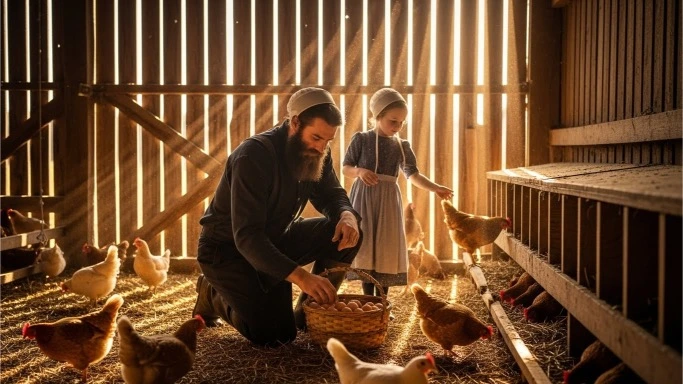
Because Amish children help with daily life from a young age, they develop a strong sense of purpose and maturity. Tasks like sweeping, milking cows, cooking, or weeding aren’t chores they dread—they’re roles that make them feel capable and trusted.
This early responsibility forms adults who are grounded and confident. They don’t search for identity through social media or external validation. Their work, family, and faith give them a deep sense of who they are.
By adolescence, boys often work alongside their fathers in construction, farming, or woodworking. Girls assist their mothers with sewing, garden harvesting, cooking for large groups, and caring for younger children. Yet these tasks are experienced not as limitations but as meaningful steps toward adulthood.
The Anabaptist Encyclopedia notes that early responsibility remains central to Amish identity, strengthening unity between generations.
Quick Insight
Amish children grow up in a world where they feel seen, needed, and valued. Their identity forms through connection—not comparison.
Discipline Rooted in Peace — A Different Kind of Strength
Many people assume that Amish discipline must be strict or harsh, but the opposite is true. Amish parents aim for calm, consistent, and loving correction. They use gentle redirection, natural consequences, and private conversations instead of loud punishment.
A child might lose a privilege, redo a task, or apologize sincerely, but they rarely feel shamed. Parents believe that a child understands discipline best when the correction comes from a place of peace.
This approach teaches self-control and empathy. Amish children learn that actions carry weight, yet they always know that they remain loved and accepted.
You may enjoy how this calm, steady parenting aligns with Amish values explored in Amish Men Through Generations: Preserving Faith in a Modern World.
The Role of Work and Play in Emotional Health
Amish children rarely experience the disconnection that comes from overstimulation or endless screen exposure. Their days balance structure and freedom—morning chores followed by play, mid-day meals eaten together, and evening routines that feel predictable and comforting.
This balance strengthens emotional health. Children feel needed because they help with real tasks. They feel free because their play is creative. And they feel safe because the community surrounds them with consistency and care.
Psychologists often highlight how predictable rhythms build calm minds. Amish parenting lives out that wisdom naturally.
Raising Children for Community — Not Individualism
One of the most beautiful aspects of Amish parenting is the way children grow up with a deep awareness of their place in the community. They learn early that their choices, their work, and even their attitudes affect the people around them. This sense of connection shapes their understanding of responsibility and compassion.
Amish children also witness examples of cooperation every day—barn raisings, quilting frolics, auctions, and communal meals. These experiences teach them that life becomes lighter and more meaningful when shared. The lesson is simple, yet profound:
“You don’t walk alone. You walk with your people.”
This mindset forms adults who value service, respect, and humility—qualities that strengthen Amish communities generation after generation.
To understand how cooperation builds this unity, visit our article Old Wisdom, New Relevance: Amish Farming Techniques Still Used Today.
The Takeaway — A Childhood Full of Heart, Simplicity, and Purpose
Raising children the Amish way is not about strict rules or picture-perfect moments. It’s about building lives shaped by faith, work, family, and togetherness. Amish children grow up knowing they belong—to God, to their parents, and to their community.
They learn patience by tending gardens, resilience by caring for animals, gratitude by sharing meals, and confidence by helping with real tasks. Their world is slower, quieter, and deeply intentional. And in that simplicity, they discover something priceless—a childhood filled with purpose and peace.
While not every aspect of Amish life fits modern families, the heart of their parenting offers a gentle reminder:
Children flourish when they feel loved, needed, and connected.
Perhaps that’s the wisdom we all long to hold onto—no matter where we live or how we raise our children.