
Amish Communities Stay Self-Sufficient
In a world that feels more connected than ever—but often less secure—the Amish stand out for something most of us have lost: true self-sufficiency. While cities depend on power grids, global supply chains, and smartphones, Amish families thrive without them.
Their way of life isn’t about rejecting modernity—it’s about choosing balance. The question isn’t how they live without technology, but why they continue to do so successfully. Today, we’ll explore exactly how Amish communities stay self-sufficient, what keeps their system strong, and the lessons it offers for modern life.
Faith: The Foundation of Amish Self-Sufficiency
At the heart of Amish life is faith. Everything—work, family, and community—flows from a spiritual commitment to simplicity and humility.
The Amish believe that depending too much on the outside world can weaken both faith and unity. Their principle of Gelassenheit (submission to God’s will) teaches that true contentment comes from discipline, not indulgence.
That mindset shapes their economy and daily life: growing food, building homes, crafting goods, and sharing resources—all without modern dependence.
Reference: BBC – Religious Beliefs)
Read also: Why Amish Don’t Use Cars
Community First: The Secret to Their Strength
If you want to understand how Amish communities stay self-sufficient, look at how they function together. For the Amish, community is their safety net.
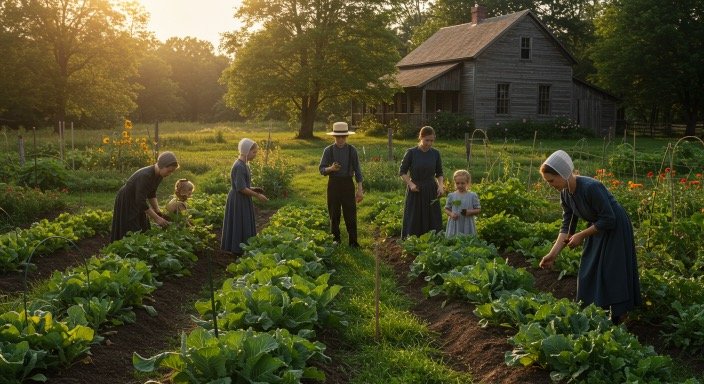
When a barn burns down, neighbors rebuild it—often within a single day. When a family faces illness, others harvest their crops. This cooperative lifestyle replaces modern systems like insurance, social welfare, and credit.
Every person has a role, and every skill contributes to the whole. Independence, ironically, is achieved through interdependence.
Reference: Smithsonian Magazine – The Amish Community
Farming: The Backbone of Self-Reliance
Amish Communities Stay Self-Sufficient
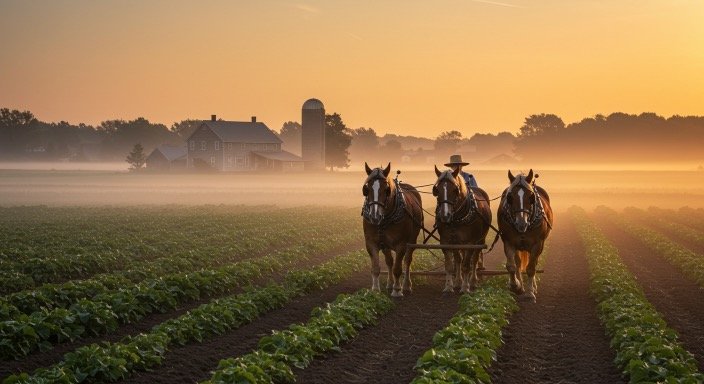
Agriculture remains the foundation of Amish survival. Without high-tech machinery or synthetic chemicals, they practice sustainable farming rooted in respect for the land.
Most Amish farmers use horse-drawn plows and rotate crops like corn, hay, and alfalfa to keep soil fertile naturally. Instead of relying on commercial fertilizers, they use compost and manure—returning nutrients to the earth.
This commitment to organic stewardship ensures both long-term productivity and independence from industrial agriculture.
Explore: Old Wisdom, New Relevance — Amish Farming Techniques Still Used Today)
Education: Learning for Life, Not Competition
Amish schools may only go up to eighth grade, but their students graduate with skills many adults wish they had.
Instead of standardized tests, Amish education focuses on reading, writing, arithmetic, and practical knowledge—woodworking, farming, home economics, and ethics.
Children learn by doing, often working alongside parents. This hands-on approach ensures that every young person can contribute to the community by the time they reach adulthood.
It’s not about grades; it’s about purpose.
Reference: BBC – Inside Amish Schools)
Skills That Build Independence
From furniture and quilts to harnesses and leather goods, Amish craftsmanship is renowned worldwide. But these skills aren’t just businesses—they’re survival tools.
In every community, you’ll find blacksmiths, carpenters, tailors, and bakers. Each trade supports the others, forming an economy rooted in local exchange rather than global dependence.
Amish-built furniture, for example, is famous for quality because it’s made by hand—without electricity but with precision and pride.
Reference: Modern Farmer – Manual Trades in Amish Culture
Homemaking: The Heart of Self-Sufficiency
Amish women are the anchors of household sustainability. They manage large families, bake daily bread, sew clothing, and preserve food for winter.
Canning, fermenting, drying, and freezing ensure that even in harsh weather, the family thrives without supermarkets. Handmade quilts, soaps, and candles also serve as income sources through local sales or markets.
Each task connects home and community in a cycle of care and productivity.
Reference: Amish Heritage – Homemaking in Amish Families
Living Off the Grid
Amish Communities Stay Self-Sufficient
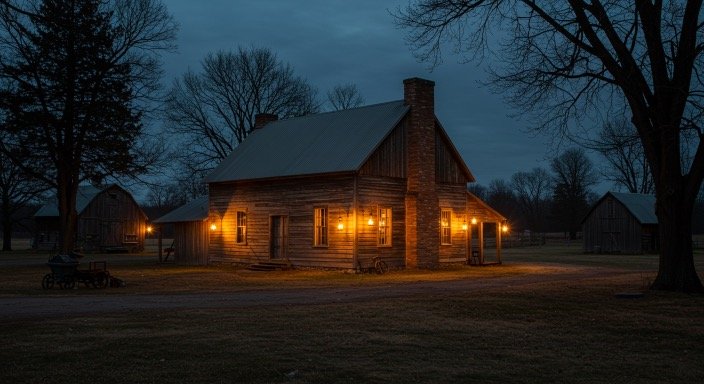
The Amish lifestyle minimizes reliance on public utilities. Without electricity from the grid, they use gas lamps, wood stoves, and gravity-fed water systems.
Some groups allow pneumatic tools (air-powered) or solar panels for limited use, especially in shops or dairies. The principle remains: technology must serve, not control.
This approach to energy keeps their footprint light—and their freedom intact.
Reference: Yale Environment 360 – Lessons from Amish Sustainability
Economic Self-Sufficiency: Local, Honest, Sustainable
While farming is central, many Amish families run small businesses—furniture workshops, bakeries, greenhouses, and construction crews. These enterprises rely on word-of-mouth and trust rather than advertising.
They favor cash or check transactions and avoid debt. Profit is secondary to reputation and reliability.
By keeping commerce local, they strengthen both community bonds and ethical accountability.
Reference: Cornell Small Farms Program – Amish Enterprises
Livestock and Food Security
Animals are another pillar of Amish sustainability. Horses power transportation and fieldwork; cows and goats provide milk; chickens lay eggs; and pigs supply meat.
Each animal plays a role in the ecosystem—manure enriches soil, crops feed livestock, and nothing goes to waste.
This harmony between people, animals, and the land forms a closed, balanced food system rarely seen in modern agriculture.
Reference: USDA – Sustainable Livestock Systems
Technology on Their Terms
Amish communities vary in what technology they permit. Old Order Amish avoid electricity altogether, while New Order groups may allow phones in barns or solar panels on workshops.
The key is collective discernment: if a tool threatens humility or unity, it’s rejected. If it serves community needs without fostering pride or dependence, it may be cautiously accepted.
Their guiding rule? Technology should simplify life—not complicate it.
Reference: History.com – The Amish and Technology
Conflict Resolution and Internal Peace
Without courts, lawsuits, or police forces, the Amish resolve disputes through church discipline and mutual forgiveness.
If a conflict arises, elders mediate privately, and the goal is always reconciliation, not punishment. This deep respect for forgiveness keeps the community strong and avoids the divisions common in modern society.
It’s another form of self-sufficiency—spiritual independence that sustains peace.
Reference: The Conversation – Amish Conflict Resolution
Environmental Harmony
Their traditional methods—crop rotation, composting, hand tools, and minimal waste—naturally protect the environment.
Because they live close to nature, the Amish see climate not as a statistic but as a lived experience. Their lifestyle minimizes pollution, conserves water, and encourages biodiversity.
They’re proof that sustainability doesn’t always require innovation—sometimes it just means preserving what works.
Reference: Rodale Institute – Organic Farming Practices
What We Can Learn from the Amish
For the rest of us, modern dependence is both a comfort and a trap. The Amish show that security comes from skills, relationships, and faith—not from convenience.
Their values teach us to:
- Rebuild local economies by supporting small businesses.
- Grow your own food or buy from nearby farms.
- Simplify technology use to regain time and clarity.
- Prioritize community and kindness over competition.
Reference: The Guardian – Lessons from Amish Life
Final thoughts: Modern Lessons from Ancient Wisdom
The Amish have achieved something extraordinary: stability in a chaotic world. Their self-sufficiency isn’t luck—it’s the result of daily discipline, cooperation, and unwavering faith.
While most of us can’t live entirely off the grid, we can adopt the mindset that makes Amish life so resilient. Focus on what truly matters: relationships, resourcefulness, and respect for creation.
That’s how Amish communities stay self-sufficient—and how we can learn to thrive, too.Discover: What Keeps Amish Communities Self-Sufficient in a Fast-Changing World)