

Do Amish Pay Taxes
If you’ve ever driven past an Amish farm or bought a handmade quilt at an Amish market, you might have wondered: “Do the Amish pay taxes like the rest of us?”
Their horse-drawn buggies, plain clothes, and off-grid lifestyle often make people think they live outside modern systems entirely. But that’s not quite true.
The answer may surprise you: yes, the Amish do pay most taxes—but not in quite the same way as everyone else. Their financial habits are guided by faith, self-reliance, and a commitment to avoid government dependence.
Today, we’ll explore how Amish taxes really work, what they do (and don’t) pay, and why their approach reflects the heart of their simple, sustainable way of life.
Reference: IRS – Tax Guide for Religious Sects
Faith, Work, and Responsibility
The Amish view paying taxes as part of “rendering unto Caesar what is Caesar’s” (Matthew 22:21). They believe in obeying the law of the land as long as it doesn’t conflict with their faith.
Their self-sufficient lifestyle doesn’t exempt them from civic duty—it enhances it. They work the land, earn income, and sell products, so they understand that taxes support the public systems they quietly coexist with.
Reference: Amish America – Amish Beliefs and Civil Laws
Read next: How Amish Communities Stay Self-Sufficient: Everything You Need to Know
The Short Answer: Yes, Amish Pay Taxes
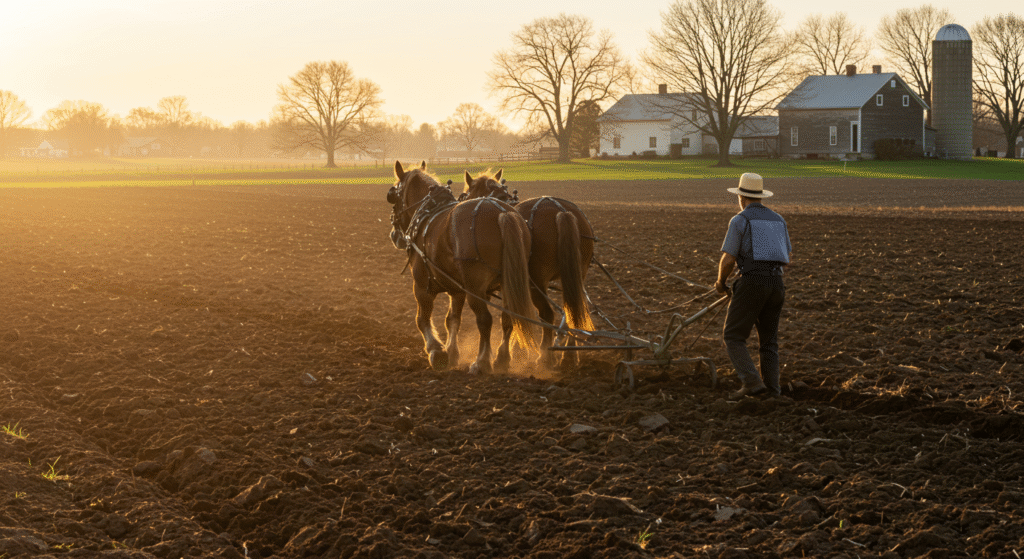
Do Amish Pay Taxes
Despite their distinct separation from the modern world, Amish citizens are not tax-exempt. They pay a wide range of taxes that include:
- Income taxes (federal, state, and local)
- Property taxes
- Sales taxes
- Business taxes (for those who run shops or farms)
The only major area where the Amish receive an exemption is Social Security and Medicare taxes—and even that comes with clear religious reasoning.
Reference: IRS Topic No. 417 – Exemption for Religious Sects
Income and Property Taxes: A Civic Duty
Amish families pay federal and state income taxes like everyone else. Their farms and small businesses report earnings and pay the appropriate share.
In fact, Amish farmers often keep meticulous paper records for income and expenses—without using computers. Many work with non-Amish accountants who understand their specific religious exemptions.
They also pay property taxes on their homes, barns, and farmland, just like neighboring residents. Those funds support schools, roads, and emergency services—even though the Amish rarely use public education themselves.
Reference: Federal Tax Resolution – Amish Tax
Supporting Local Schools They Don’t Attend
Although Amish children leave school after eighth grade to focus on practical skills, their parents still pay property taxes that fund public education.
They build and maintain their own private Amish schools, typically small one-room classrooms where students learn practical academics and religious values.
In other words, the Amish pay twice: once for public schools they don’t use, and again for their own community-based education. It’s an act of quiet civic contribution that reflects both faith and fairness.
Reference: Iowa PBS – Amish Schools
Sales and Excise Taxes
The Amish pay sales tax on items purchased outside their community, such as hardware, lumber, or fabrics. They also pay fuel taxes when purchasing gas for generators or diesel for farming machinery.
However, they minimize these taxes by living simply—buying less, growing their own food, and making many household goods by hand.
In a world driven by consumerism, Amish financial discipline shows how frugality can be both spiritual and practical.
Reference: Amish Rules
Social Security & Medicare: The Religious Exemption
Here’s where things get interesting. The Amish do not pay Social Security or Medicare taxes, and they also do not collect benefits from these systems later in life.
This exemption stems from the Religious Freedom Restoration Act and has been recognized by the IRS since the 1960s.
To qualify, members must:
- Belong to a recognized religious sect that provides for its elderly, disabled, and sick members.
- Waive their right to any future Social Security or Medicare benefits.
- File Form 4029 to obtain formal exemption status.
Instead of government insurance, Amish communities maintain their own mutual aid funds, where members contribute money to support one another in times of need.
Reference: IRS Form 4029 – Application for Exemption from Social Security and Medicare Taxes
Healthcare and Community Aid
When it comes to medical bills, the Amish rely on community support rather than insurance or federal programs.
If someone faces a major hospital expense, fellow church members often donate or hold benefit auctions to cover costs. This system of collective responsibility allows them to remain outside mainstream health insurance while still caring for one another.
Some newer Amish businesses may use limited private insurance, but federal programs like Medicare and Medicaid are avoided entirely.
Source: PMC – How Amish Communities Handle Health Care
Business and Farm Taxes
Amish-owned businesses are subject to the same business taxes and regulations as any others. They pay income tax on profits and must file state and federal returns.
The only difference is that Amish entrepreneurs operate primarily with paper invoices and manual bookkeeping—reflecting their technological restraint but not tax avoidance.
Their compliance with civil law is part of their Christian witness. In their eyes, honest work deserves honest reporting.
Source: Cornell Small Farms Program – Amish Enterprises
Imports, Vehicles, and Fuel

Do Amish Pay Taxes
Though the Amish don’t own cars, they still use Amish taxis—private drivers from outside the community—to travel long distances. These services are taxable for the driver, not the passengers.
They also pay fuel taxes indirectly when purchasing propane, diesel, or kerosene for lamps and equipment. Even though they reject electricity, their connection to the modern economy is unavoidable—and their tax contributions reflect that.
Related: Why Amish Don’t Use Cars — Faith Over Convenience
How Amish Self-Sufficiency Replaces Federal Aid
While most Americans rely on public assistance in emergencies, the Amish rely on community structure.
Their church districts collect donations, organize work crews, and ensure no family falls through the cracks. From medical bills to disaster recovery, everything is handled internally.
This private welfare system reinforces why they seek exemption from government programs—they don’t take from systems they choose not to support.
Source: Ohio Amish Country – Amish Mutual Aid and Faith-Based Support
The Philosophy Behind It All
For the Amish, paying taxes isn’t a burden—it’s a boundary. They meet their legal obligations but draw a clear line between civic duty and spiritual independence.
This mindset allows them to live peacefully under U.S. law while maintaining religious autonomy. It’s an agreement of mutual respect: they contribute financially without compromising their beliefs.
Common Myths About Amish Taxes
Let’s debunk a few misconceptions:
- ❌ Myth: The Amish don’t pay any taxes.
✅ Truth: They pay income, property, sales, and business taxes. - ❌ Myth: They secretly benefit from Social Security.
✅ Truth: Amish members formally waive all rights to federal benefits. - ❌ Myth: They receive free government services.
✅ Truth: The Amish avoid welfare, insurance, and most forms of public aid.
Lessons for Modern Society
The Amish prove that you can fulfill civic duties while remaining independent. Their tax model is both responsible and ethical—grounded in mutual respect rather than entitlement.
They remind us that self-sufficiency doesn’t mean isolation. It means contribution through community and conscience.
Even in matters as practical as taxes, their lifestyle teaches us something spiritual: true freedom comes from responsibility, not avoidance.
Read also: What Keeps Amish Communities Self-Sufficient in a Fast-Changing World
Final Thoughts: Faith, Fairness, and Freedom
So, do the Amish pay taxes? Yes—almost all of them. They contribute financially to the same systems they share roads, markets, and borders with. The difference lies in what they expect in return: nothing.
Their refusal to accept Social Security and government assistance isn’t about rebellion—it’s about self-respect. They believe in helping one another, not relying on bureaucracies.
In a society searching for sustainability and accountability, the Amish stand as a living example that simplicity and duty can coexist beautifully.
Do Amish Pay Taxes
Our Authority Sources
- IRS – Tax Guide for Religious Sects
- Amish America – Amish Beliefs and Civil Laws
- IRS Topic No. 417 – Exemption for Religious Sects
- Federal Tax Resolution – Amish Tax
- Iowa PBS – Amish Schools
- Amish Rules
- IRS Form 4029 – Application for Exemption from Social Security and Medicare Taxes
- PMC – How Amish Communities Handle Health Care
- Cornell Small Farms Program – Amish Enterprises
- Ohio Amish Country – Amish Mutual Aid and Faith-Based Support